Two years ago, Teresa A. Hubka, DO, FACOOG (Dist.), FACOG, CS, spoke with the Bureau of Emerging Leaders (BEL) as the incoming president of the American Osteopathic Association and shared a vision she called, “Grow DO.”
Now, after serving President and Immediate Past President of the AOA, Dr. Hubka reflected on leadership, stewardship and what lies ahead for the osteopathic profession.
Growing DO in the present
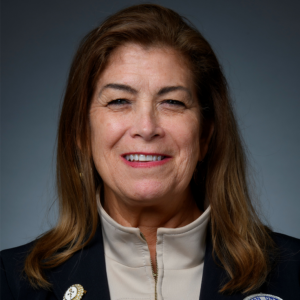 “I love our profession, and I think we are going in the right direction,” Dr. Hubka said. “It’s great to be part of a profession that is actively growing. We have new ideas, new schools, more students and individuals in the profession. I’m excited.”
“Grow DO” was a call to strengthen osteopathic identity, connect the osteopathic family, and encourage students, residents, fellows and new physicians to take ownership in the life of the profession. That growth, in her view, was not simply about numbers. It was about helping osteopathic physicians remember who they are and why their work matters.
During her presidency, Dr. Hubka saw that growth firsthand as she visited colleges of osteopathic medicine, or COMs, and state associations across the country: “It was humbling and invigorating to see how our profession is really growing,” she recalled.
She remembered, “the energy that was in the colleges and the excitement to get involved, to get engaged.” Students came to her asking, “What more can we do?”
That mindset, Dr. Hubka noted, is essential for the future of the profession. Leadership in osteopathic medicine is not reserved solely for those with formal titles, future appointments or some distant stage of practice. It begins now, in the way students and young physicians understand their identity, engage in their profession and care for the people around them.
Her charge was direct: “You are not the future, you are now.”
Serving as president brought Dr. Hubka close to the “pulse of the profession” while helping guide a large and complex organization. She described the AOA as something bigger than any one person, composed of many essential parts: students, residents, practicing physicians, state associations, COMs and patients.
“What I learned being president was that everyone has great ideas, and we have to utilize those ideas together,” she remarked.
Reflective leadership in practice
This conviction reflects what Dr. Hubka has long described as reflective leadership. To her, leadership requires listening deeply, carefully weighing options, and then guiding others forward. When a decision is made, “you may never reach everyone 100%,” she acknowledged, “but at least they need to know they were heard and understand the why behind a decision.”
Leadership is not simply having a seat at the table. It is the work of helping others become active participants in a shared mission. It is listening long enough for people to know they matter, making decisions that move the work forward, and explaining the “why” with enough care that others can continue walking together.
Dr. Hubka recalled that the presidency carried a rigorous rhythm of travel, meetings, decisions and visible presence across the osteopathic profession. During a trip to the Northeast with AOA CEO Kathleen Creason, MBA, the responsibilities of the role required both flexibility and creativity. Dr. Hubka recounted one day that included a state association visit, a COM visit in Pennsylvania and a virtual meeting with another state association while traveling to the next commitment.
“What I appreciated was that everyone was so flexible in working with our schedules,” she recalled.
Leadership beyond the title
Time after the presidency has not meant stepping away from leadership. Dr. Hubka continues to serve through mentoring, consulting and teaching. She remains engaged with students, residents, COMs and state societies. She has also taken on new opportunities to make medicine more patient-oriented and physician-friendly.
“We should never stop or else life gets still,” she shared.
This posture of lifelong learning is one of the most important lessons she hopes all students will carry forward. Leadership does not make a person immune from being a beginner again. In fact, the best leaders remain willing to enter new rooms, ask questions, and learn from others. As Dr. Hubka put it, she has learned as much from students as they have learned from her.
The discipline of sustaining service
Her reflections also carried a word of caution for students and young physicians who feel pressure to say yes to every opportunity. Dr. Hubka acknowledged that she has often been described as someone who is “always on,” but a life of service still requires discernment.
“You burn yourself out by saying yes without discretion; you have to know when you can do it,” she acknowledged. “It is okay to say no.”
For Dr. Hubka, rest is not a retreat from service, but part of sustaining it. She spoke about the importance of time for family and personal renewal. Her Catholic faith remains an important source of grounding, and she recently took time for a pilgrimage to Greece. Walking in the footsteps of St. Paul, she reflected on faith, history, family and learning. For one whose life has often been marked by motion, the pilgrimage became a reminder that saying no to some things can make room for what restores the soul and strengthens long-term service.
The human touch in an age of AI
When asked what hopes she has for osteopathic students, residents, fellows and new physicians, Dr. Hubka returned to the topic of identity. She hopes that emerging physicians will see osteopathic medicine as a gift to be embodied. She acknowledges that not every DO will perform osteopathic manipulation in their practice, but “every DO can lay hands on the patient. It is a blessing [and] it is a gift.”
In an age increasingly shaped by technology, Dr. Hubka hopes that for osteopathic physicians, AI represents augmented intelligence rather than artificial intelligence: “You will always find something smarter or faster,” she said, “But for osteopathic physicians, it’s the compassion, the listening, being present for the patient. You still need that human touch.”
At the close of our conversation, Dr. Hubka returned to A.T. Still, DO. She recalled his belief that there are no greater initials behind a person’s name than DO. Her final encouragement was not only to take pride in those initials, but to live them well.
“Believe in who you are,” she concluded, “Carry it forward, and teach those behind you to believe wholeheartedly.”